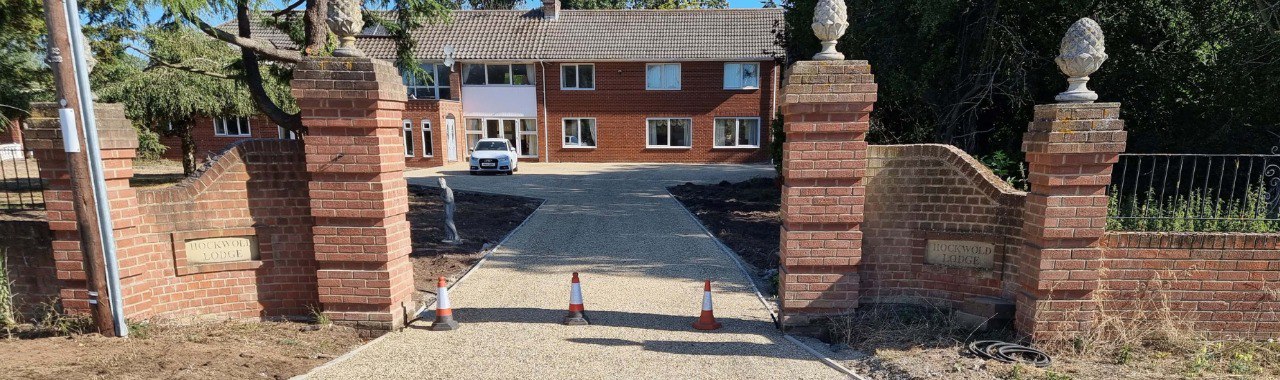
How Can Tarmac Improve Access to a Busy Residential Property?
Creating a Smooth, Durable and Practical Surface for Daily Use
A busy residential property may experience frequent vehicle movements, regular deliveries and repeated pedestrian use throughout the day. If the entrance or driveway is uneven, muddy or affected by loose material, everyday access can become inconvenient and difficult to manage.
Tarmac provides a smooth, continuous surface that can make movement around the property more straightforward. Its effectiveness, however, depends on suitable ground preparation, drainage, layout and installation. These elements must be planned together if the finished driveway is to support reliable daily use.
Provides a Consistent Surface for Vehicles
Loose gravel, worn concrete and deteriorated paving can create uneven areas that affect how vehicles enter, turn and park. Tarmac forms a compact surface without loose aggregate across the main driveway.
This can provide more predictable access for:
- Cars entering and leaving several times a day
- Households with multiple vehicles
- Regular deliveries
- Visitors parking on the property
- Bicycles and pushchairs
- Bins and other wheeled items
A consistent surface is particularly useful where the driveway is narrow or where drivers need to manoeuvre carefully.
Reduces Mud and Loose Material
An unsurfaced or failing driveway can transfer mud, dust and loose stones towards the house, garage and adjoining paths. Repeated vehicle movements may also deepen ruts and spread loose material beyond the driveway edges.
Tarmac creates a sealed running surface that is easier to sweep and keep orderly. Correctly formed edges help contain the driveway and reduce erosion where the surface meets lawns, planting areas or paths.
Supports Frequent Vehicle Movement
Tarmac is well suited to driveways that experience regular use, provided the construction is designed for the expected traffic. The compacted layers distribute vehicle loads across the driveway and help the surface resist everyday movement.
The intended use should be assessed before installation. Important considerations include:
- The number of vehicles using the property
- The weight and type of vehicles
- Where vehicles will park
- Whether turning is required
- Areas exposed to repeated braking or steering
- The frequency of deliveries
This information helps determine the appropriate preparation and surfacing specification.
Makes Parking and Turning Areas Easier to Define
A new tarmac driveway provides an opportunity to improve how the available space is organised. The layout can be designed to create clearer parking positions, more practical turning space and a smoother route between the entrance, house and garage.
The best arrangement is not always the largest surfaced area. Careful planning should consider vehicle dimensions, door clearance, pedestrian routes and how drivers enter and leave the property. This can reduce awkward manoeuvring and make the driveway easier to use at busy times.
Connects Different Areas of the Property
Tarmac can be laid across driveways, access routes and connecting paths to create continuity between different parts of the property. A consistent surface can reduce abrupt level changes and untidy transitions.
Particular attention should be given to connections with:
- The garage entrance
- Existing paths
- Gates
- Steps
- Drainage channels
- The property entrance
- Other hard-surfaced areas
These junctions must be carefully formed so they do not create weak edges, trip points or places where water collects.
Effective Drainage Keeps Access Usable
Drainage is fundamental to the performance of a tarmac driveway. Standing water can make access less convenient and may gradually affect the surface or supporting layers.
The driveway should be installed with suitable falls that direct water towards the intended drainage points. The design needs to account for natural ground levels, building entrances and low areas where rainfall could collect.
Drainage channels, outlets and adjoining surfaces must work together. Addressing these details before tarmac is laid is more effective than trying to correct poor water flow afterwards.
A Strong Foundation Prevents Uneven Access
A tarmac surface will only perform as well as the base beneath it. If the ground has not been excavated and compacted correctly, vehicle traffic may cause settlement, depressions or cracks.
Professional preparation generally involves:
- Removing unsuitable surface material
- Excavating to an appropriate depth
- Installing a stable aggregate sub-base
- Compacting each layer correctly
- Establishing the required levels and falls
- Adding secure edge restraints
This creates a firm platform that helps the driveway remain even under regular use.
Edge Restraints Protect Busy Areas
Driveway edges are vulnerable where vehicles repeatedly pass close to lawns or planting areas. Without suitable support, the tarmac may begin to crack or break away.
Secure edging contains the surface and provides a defined boundary. It is especially important around narrow entrances, turning points and parking spaces where tyres may regularly approach the edge.
The layout should provide sufficient usable width so drivers are not forced to place one wheel partly off the driveway.
Tarmac Can Suit Different Driveway Shapes
Tarmac can be laid around curves, buildings and established landscape features, making it suitable for a variety of property layouts. Its continuous finish avoids the numerous individual joints associated with some other surfaces.
This flexibility can be useful when adapting an awkward entrance or creating a wider parking and turning area. Accurate setting out remains essential, as the driveway shape must support practical movement as well as appearance.
Simple Maintenance Supports Long-Term Performance
Routine attention helps keep a tarmac driveway in good condition. Leaves and debris should be removed from the surface and drainage channels kept clear.
Property owners should also monitor for:
- Fine cracks
- Loose edges
- Small depressions
- Water collecting after rain
- Movement around drainage points
- Damage caused by concentrated vehicle loads
Early assessment can establish whether a minor defect needs attention before it affects a larger area.
Why Professional Installation Matters
Improved access depends on more than the final appearance of the tarmac. Levels, drainage, sub-base depth, compaction and edge support all influence how the driveway performs.
A professional site assessment considers how vehicles and pedestrians use the property before the work is planned. This produces a surface designed around actual daily movement rather than simply covering the existing ground.
Conclusion
Tarmac can improve access to a busy residential property by creating a smooth, consistent surface for vehicles and pedestrians. It can reduce mud and loose material, support frequent traffic and make parking and turning areas easier to organise.
If you are considering a new or improved driveway in Rye, East Sussex, Rye Driveways & Surfacing can assess your access requirements and recommend a suitable tarmac installation. Contact the team to discuss a driveway designed around the everyday use of your property.
Call us on: 01797 334 498
Click here to find out more about Rye Driveways & Surfacing
Click here to complete our contact form and see how we can help with your driveways.