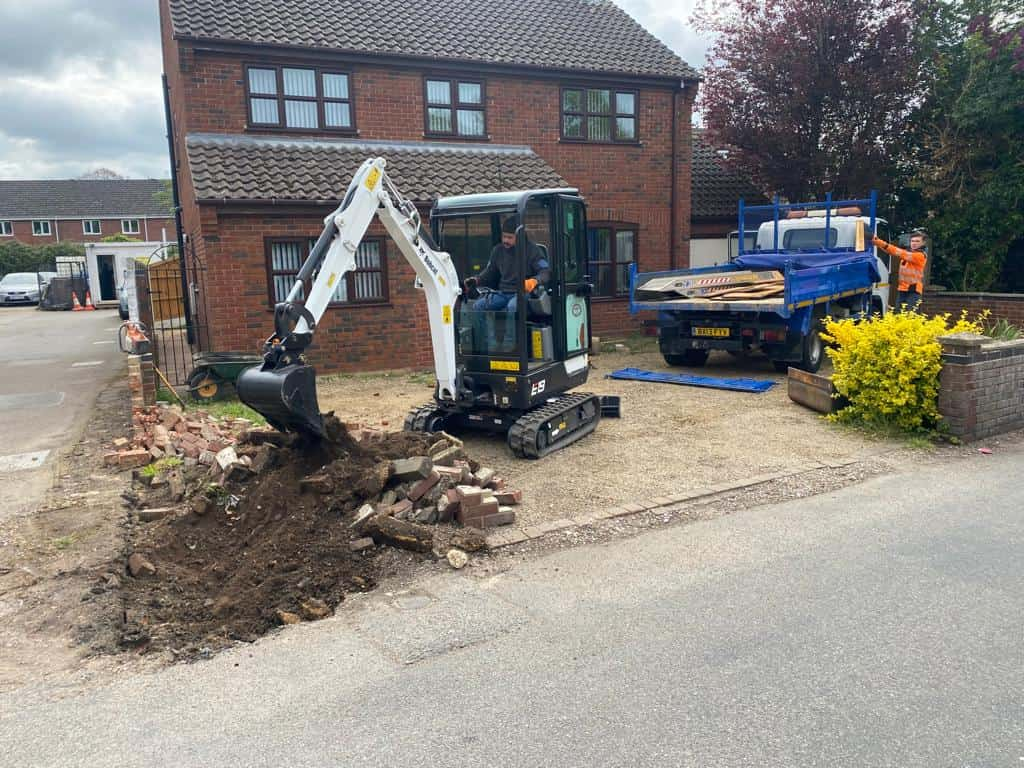
How Proper Ground Preparation Makes a Difference to Your New Driveway
When planning a new driveway, it is natural to focus on the finished surface. The colour, texture, layout and overall appearance are the elements that will be visible every day. However, some of the most important work involved in creating a dependable driveway takes place before the final surface is installed.
Ground preparation provides the foundation on which the entire driveway depends. If the supporting layers are unstable, poorly compacted or unsuitable for regular vehicle use, even a high-quality surface can eventually develop problems. Proper preparation helps create a stable platform, establish appropriate levels and ensure the driveway is constructed around the conditions of the site.
For homeowners in Rye, East Sussex, Rye Driveways & Surfacing takes a complete approach to driveway installation, giving careful attention to the ground beneath the finished surface as well as the appearance above it.
Why Is Ground Preparation So Important for a Driveway?
A driveway experiences repeated loads in many of the same locations.
Vehicles enter through the same access point, follow similar routes and often park in consistent positions. Turning and manoeuvring can place further demands on particular sections.
The surface cannot deal with all of these forces independently. It relies on properly constructed supporting layers beneath it.
Good Ground Preparation Helps Provide:
- Stable support for regular vehicle use
- Consistent surface levels
- A suitable foundation for the chosen driveway material
- Reduced risk of unnecessary settlement
- Better management of weak areas
- A sound base for the finished installation
- More consistent performance across the driveway
This is why preparation should be treated as an essential stage rather than simply the work required to make space for the new surface.
What Happens Before a New Driveway Is Installed?
Every site is different, so preparation should reflect the existing conditions and intended use of the driveway.
The first step is understanding what is already there.
An existing driveway may contain old surfacing, weak areas, previous repairs or sections that have settled. A completely new driveway area may have ground that has never previously been prepared to accommodate regular vehicles.
The Initial Assessment Can Consider:
- Existing surface materials.
- Ground stability.
- Current levels.
- Soft or uneven sections.
- How vehicles will use the area.
- Where water currently travels or collects.
- How the driveway will meet surrounding surfaces.
- The position of edges and access points.
This information helps determine what preparation is actually required.
Excavation Needs to Be Appropriate for the Site
Installing a new driveway is not simply a matter of removing the top surface and replacing it with something more attractive.
Unsuitable materials may need to be removed so that a stable driveway construction can be created.
The amount and nature of preparation will depend on the individual site, existing ground and proposed surface.
What matters is that the finished driveway is supported by appropriate materials rather than being constructed over weak or unsuitable ground.
Why the Sub-Base Is So Important
The sub-base is one of the most important parts of a driveway, despite being completely hidden after completion.
Its role is to provide stable support and help distribute the loads created by vehicles across the driveway construction.
An Inadequate Base Can Contribute To:
- Localised sinking
- Uneven areas
- Surface cracking
- Movement
- Depressions around parking positions
- Problems near entrances
- Changes in drainage patterns
The exact way these problems appear depends partly on the type of finished surface, but the underlying principle remains the same: a driveway needs a stable foundation.
Compaction Makes a Significant Difference
Installing suitable supporting material is only part of the process.
It also needs to be properly compacted.
Loose material can settle once vehicles begin regularly travelling over it. If that settlement is inconsistent, the driveway above can begin changing shape.
Professional compaction helps create a more consistent and stable foundation before subsequent layers are installed.
Why Is Consistent Compaction Important?
Imagine one part of a driveway has a firm supporting base while another remains relatively loose.
Once vehicles begin using the area, the weaker section may settle more readily. The surface above can then develop a dip even though the finished material itself was installed correctly.
Thorough preparation reduces this risk by focusing on consistency beneath the complete driveway.
Existing Soft Spots Should Not Be Covered Over
If an existing driveway contains a soft or unstable section, simply hiding it beneath a new surface does not necessarily resolve the problem.
Weak ground should be investigated during preparation.
Warning Signs of Existing Ground Problems Can Include:
- Persistent dips
- Areas that repeatedly sink
- Cracking in similar locations
- Rutting
- Loose or unstable sections
- Puddles appearing in depressions
- Previous repairs that continue moving
These signs can provide valuable clues about what is happening beneath the old driveway.
Addressing them before the new surface is installed can prevent existing weaknesses from being carried into the replacement construction.
Correct Levels Begin During Ground Preparation
The levels of a driveway should not be left until the final surfacing stage.
They need to be established throughout the supporting construction.
Good levels influence how the driveway looks, how comfortable it is to use and how surface water moves across it.
Levels Should Take Account Of:
- The property entrance
- Existing ground height
- Vehicle access
- Surrounding paths
- Garden areas
- Driveway edges
- Low points
- Surface water movement
Planning these details early allows the complete driveway construction to work towards the intended finished profile.
Ground Preparation and Drainage Work Together
Water management is closely connected with driveway levels.
If the underlying construction creates inappropriate falls or low areas, water may collect on the finished surface.
This is why drainage should form part of the driveway planning process from the beginning.
A professional installation considers how rainfall will behave once the driveway is completed rather than waiting to see where puddles develop afterwards.
Why the Driveway Entrance Needs Particular Attention
The entrance can be one of the hardest-working parts of a driveway.
Every vehicle using the property may pass over the same relatively narrow area, meaning traffic is concentrated in one location.
Ground preparation around the entrance should therefore be approached carefully.
Suitable support and consistent levels help create a stable transition into the main driveway and reduce the likelihood of one heavily used section behaving differently from the rest.
Parking Areas Also Experience Concentrated Use
Vehicles often remain in the same parking positions for long periods and return to those positions day after day.
This means certain areas of the driveway experience more concentrated loading than others.
Proper preparation provides the support needed beneath these regularly used sections.
A driveway should therefore be designed around realistic everyday use rather than assuming every part of the surface will experience identical conditions.
Preparation Matters Whatever Surface You Choose
Different driveway materials have different characteristics, but all require appropriate foundations.
Whether the finished driveway uses tarmac, block paving, resin or another suitable surfacing system, the quality of the supporting construction remains important.
Ground Problems Can Appear Differently
With one surface, movement might become visible as cracking.
With another, individual units may sink or become uneven.
Elsewhere, a depression may develop and begin collecting water.
Changing the surface material does not remove the need for proper preparation underneath it.
Can Good Ground Preparation Help Prevent a Driveway From Sinking?
Proper preparation can greatly reduce avoidable settlement by ensuring unsuitable ground is addressed and supporting materials are appropriately installed and compacted.
However, the objective is not simply to create the hardest possible base.
The construction should be appropriate for the site and the expected use of the driveway.
A professional assessment allows preparation to respond to the actual conditions rather than applying exactly the same approach to every property.
Why Edge Preparation Matters Too
The centre of the driveway is not the only area that requires attention.
Edges form important transitions between the driveway and surrounding ground, landscaping or other surfaces.
Poorly prepared edges can become vulnerable to movement, particularly where vehicles regularly travel close to the perimeter.
Good Edge Planning Can Help:
- Define the driveway clearly
- Support the finished surface
- Create neat transitions
- Maintain the intended layout
- Integrate the driveway with surrounding areas
Edge details should therefore be considered during preparation rather than added as an afterthought.
What Happens If Preparation Is Rushed?
A newly surfaced driveway can initially look excellent even when the construction underneath is inadequate.
The consequences may only become apparent after the surface has experienced regular use and changing weather conditions.
Problems Can Eventually Include:
- Settlement
- Dips
- Cracking
- Rocking paving
- Rutting
- Standing water
- Edge movement
- Uneven areas
At that stage, repairing the visible surface without addressing the foundation may only provide a temporary improvement.
Why Covering an Old Driveway Is Not Always the Answer
An existing surface may sometimes form part of a suitable installation, depending on its condition and the proposed driveway system.
However, it should never simply be assumed that the old construction is adequate.
If an existing driveway already has widespread movement, sinking or recurring defects, these problems need to be understood before new surfacing is considered.
A professional assessment helps determine what can remain and what requires attention.
Ground Preparation Can Improve the Finished Appearance
Preparation is primarily about performance, but it also influences appearance.
A stable, accurately prepared base helps the final surface achieve more consistent levels and cleaner transitions.
This can make a noticeable difference around:
- Property entrances
- Garage thresholds
- Path connections
- Driveway edges
- Gates
- Landscaping
- Changes in surface direction
A well-finished driveway begins with careful groundwork.
Why Professional Driveway Installation Adds Value
Much of the expertise involved in driveway construction relates to work homeowners will never see once the project is complete.
Assessing the ground, identifying weak sections, constructing the supporting layers, achieving correct compaction and establishing appropriate levels all require careful attention.
Professional installation focuses on the driveway as a complete structure.
The aim is not simply to create an attractive surface on completion, but to ensure that the surface has been installed over a foundation suited to its intended use.
Questions Worth Asking Before a New Driveway Is Installed
When considering a replacement or completely new driveway, it is useful to think beyond the final material.
Ask:
- What condition is the existing ground in?
- Are there areas that currently sink or hold water?
- Where will vehicles normally park?
- Which sections will experience the most traffic?
- How will water move across the finished driveway?
- How will the surface meet existing paths and entrances?
- Are there previous problem areas that need investigation?
Answering these questions during planning can help create a more practical finished driveway.
Professional Driveway Preparation in Rye
For homeowners in Rye, East Sussex, Rye Driveways & Surfacing understands that dependable driveway installation begins beneath the finished surface.
We assess the existing area and consider ground conditions, vehicle use, levels, drainage, supporting construction and edge details before the final surfacing is completed.
This approach allows the driveway to be constructed around the individual property rather than simply applying a new surface over whatever is already there.
Conclusion
Proper ground preparation can make a substantial difference to the performance, appearance and everyday usability of a new driveway.
A stable sub-base, thorough compaction, appropriate levels and careful attention to existing weak areas all help provide the foundation the finished surface needs. Preparation is also closely connected with drainage, edge stability and the ability of the driveway to cope with repeated vehicle movements.
The most attractive driveway surface can only perform as well as the construction supporting it. This is why the groundwork should receive just as much attention as the visible finish.
If you are considering a new driveway in Rye, East Sussex, Rye Driveways & Surfacing can assess the existing ground and provide a professionally prepared and installed driveway designed around the practical requirements of your property.
Call us on: 01797 334 498
Click here to find out more about Rye Driveways & Surfacing
Click here to complete our contact form and see how we can help with your driveways.